
Cavity in a Baby Tooth: Does It Really Need a Filling?
The checkup is going great. Your kid is being a total champ in the chair. And then the dentist says the word: cavity.
And somewhere in the next three seconds, you think what basically every parent thinks – it’s a baby tooth. It’s going to fall out anyway. Do we really need to do this?
That’s a completely fair question, and we get asked it constantly. Here’s the honest answer, along with what your options actually are – because there are usually more than one.
First, though: a cavity doesn’t mean you did something wrong. Kids who brush twice a day, every day, still get them. The shape of a tooth’s grooves, the thickness of the enamel, genetics, how often snacks happen – all of it plays a role, and a lot of it isn’t in your control. So let’s skip the guilt and talk about the tooth.
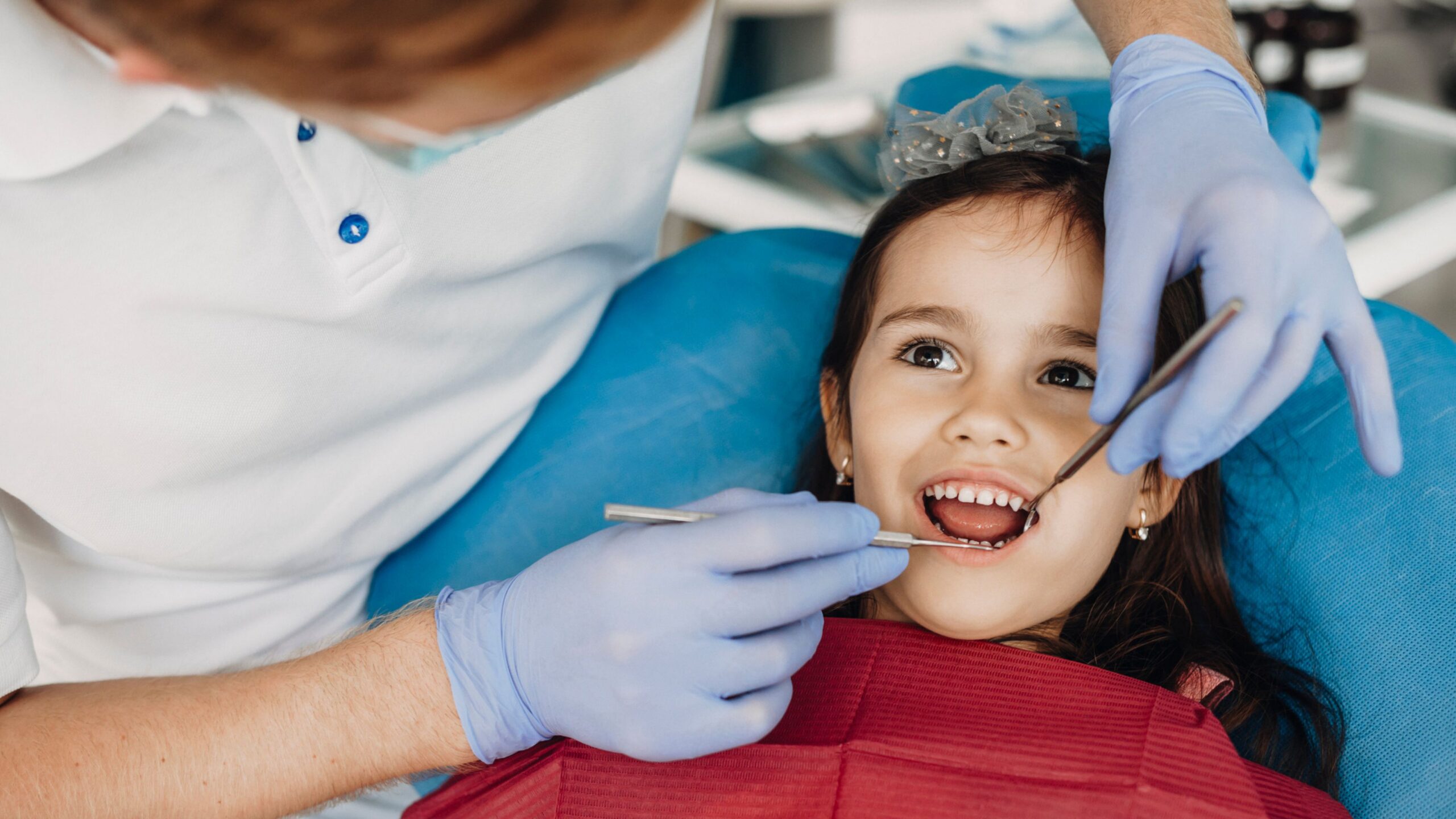
The short version
Usually, yes – a cavity in a baby tooth does need to be treated. Decay doesn’t stop on its own or heal up once it’s broken through the surface. It keeps going, toward the nerve, and it can cause real pain, infection, and even damage to the adult tooth forming underneath. Baby molars don’t fall out until around age 10 to 12, so a cavity found at age 5 has a lot of time to cause trouble. The main exception is a tooth that’s already wiggly and about to come out, where we might just keep an eye on it instead.“It’s going to fall out anyway” – well, eventually
It will. The question is when, and the answer surprises most parents. The front teeth go early, around age six or seven. That’s the tooth-fairy stage everyone pictures. But the back teeth – the molars – hang around a lot longer:Your content goes here. Edit or remove this text inline or in the module Content settings. You can also style every aspect of this content in the module Design settings and even apply custom CSS to this text in the module Advanced settings.
Here’s the catch: the molars are also the teeth that get cavities most often, because their chewing surfaces are full of tiny grooves that trap food no toothbrush can fully reach. So a cavity in a back tooth at age four has six or eight more years to do damage. That tooth isn’t running out the clock – it’s just getting started.
Why cavities move faster in little teeth
Baby teeth are built differently than adult teeth. The enamel – the hard outer shell – is thinner. And the soft center of the tooth, where the nerve lives, takes up proportionally more space.
Put those together and there’s simply less tooth between the decay and the nerve. Something that might take an adult tooth a few years to become a real problem can get there in a matter of months in a child’s mouth. That’s the whole reason we don’t just watch and wait on most of them.
What actually happens if you wait
We’re not trying to scare anyone here. But parents ask us what the real risk is, and it’s a reasonable thing to want to know. It usually unfolds like this:
First, it starts to hurt. Sensitivity to cold or sweet things, then actual pain – often at night, which is how a lot of families end up calling us on a Monday morning.
Then it can get infected. When decay reaches the nerve, an infection can form at the root. What you’d notice is a little pimple-looking bump on the gum, some facial swelling, or your child suddenly chewing on only one side.
And the adult tooth is right there. The permanent tooth is developing directly underneath, and an infection at that spot can affect how its enamel forms. That part doesn’t get a do-over.
Plus all the ordinary stuff that comes with it: rough nights, missed school, a day off work for you, and a visit that now takes a lot longer than the filling would have. If a kid’s first real memory of the dentist is a toothache appointment, that tends to stick around too.
Losing a baby tooth too early causes a different problem
Baby teeth have a job most people don’t think about: they hold space.
Each one is basically saving a seat for the permanent tooth growing beneath it. If a molar comes out years ahead of schedule, the teeth on either side start drifting into the gap. By the time the adult tooth is ready, part of its space is gone – which shows up later as crowding, a tooth stuck under the gum, or braces that might not have been necessary.
We can fix this with a small appliance called a space maintainer that holds the gap open. It works well. It’s just solving a problem that a filling would have prevented.
Baby teeth also do the everyday work of chewing, and they help shape how your child learns to make certain sounds. Losing them early affects all of it.
Good news: a filling isn’t the only option
This is the part that surprises parents most. Pediatric dentistry has moved a long way toward doing the least invasive thing that actually stops the problem. Depending on the tooth, your child’s age, and how deep the decay goes, here’s what might be on the table: A tooth-colored filling. The standard approach for a small or medium cavity in a tooth that’s sticking around a while. We remove the decay and fill the space with a BPA-free material that matches the tooth. One visit, usually a short one. Silver diamine fluoride. A liquid we paint onto the cavity that stops the decay in its tracks – no drill, no numbing, takes about a minute. It’s a great option for very young kids, children who aren’t ready to sit through treatment yet, or a tooth that’s close to falling out. The tradeoff is that it permanently turns the decayed spot black, so we use it more on back teeth than front ones. A crown. When a cavity is large or covers several surfaces of a molar, a filling doesn’t have enough healthy tooth to hold onto. A crown covers the whole tooth. Silver-colored stainless steel is the most durable and goes on back teeth; tooth-colored zirconia is the option when appearance matters. Pulp therapy – the “baby root canal.” The name sounds alarming and the procedure really isn’t. If decay has reached the nerve but the tooth can still be saved, we treat the affected part, seal it up, and usually put a crown on top. A temporary filling. If a child has several cavities at once, or isn’t quite ready for the full treatment, we can stabilize things now and do the definitive work later. Removing the tooth, plus a space maintainer. Our last resort, for a tooth that can’t be saved. If you’re ever unsure, “what are our options besides a filling?” is a perfectly good question to ask. There’s almost always a real answer.When “let’s keep an eye on it” is the right call
Sometimes it genuinely is. A few situations where we’d hold off:
The tooth is already loose and coming out in the next few months. Or what we’re seeing is a chalky white spot rather than an actual hole – that’s very early decay, and it can sometimes reverse with fluoride and a few changes to snacking. Or your child isn’t ready to sit through a filling yet, and we can stop the decay with silver diamine fluoride while they grow into it.
The difference between this and simply waiting is that we’ve looked at the tooth, taken an X-ray if we needed one, and set a date to check it again. “Watching it” means a plan. It doesn’t mean waiting until it hurts.
What the appointment is actually like
Let’s be real – most of the worry about a filling isn’t about the tooth. It’s about how your child will handle the visit.
A single filling on a baby tooth is a short appointment. We tell kids what’s happening in words that make sense to them, before it happens, so nothing comes as a surprise. Most children do beautifully, and a lot of parents are surprised by how quickly it’s over.
If your child is especially anxious, or needs a few teeth taken care of in one go, we have sedation options and we’ll talk you through exactly what that involves ahead of time. Nothing gets scheduled until you’re comfortable with the plan.
And the comparison that matters: a filling now is a quick, routine visit. That same tooth after it’s infected means a longer appointment, more numbing, a crown instead of a filling, and a kid who now has a reason to dread the dentist.
What it’s going to cost
Fillings usually fall into the “basic” category on dental plans, which a lot of PPOs cover at around 80% once you’ve met your deductible. Crowns and pulp therapy typically land in the “major” category, often closer to 50%. Your plan’s numbers may be different, and we’re glad to check before you decide anything.
Two practical notes. Treating early is simply cheaper – a filling costs less than the crown that replaces it later. And if it’s fall right now, keep in mind that dental benefits reset every January 1 and whatever’s left doesn’t carry over.
Heading off the next one
A few things that make a real difference:
Brush twice a day with fluoride toothpaste – a smear the size of a grain of rice before age three, a pea-sized amount after.
Help with brushing until around age eight. Kids get the hang of the motion long before they get good at it, and the back teeth are usually where the misses happen.
Floss anywhere two teeth touch. Cavities between the molars are common and you can’t see them – which is exactly why we take X-rays.
Watch how often, not just how much. A juice box finished in ten minutes is easier on teeth than the same juice box sipped over two hours. It’s the number of times sugar hits the teeth that drives decay.
Ask us about sealants. A thin protective coating over the grooves of the molars, which is where most childhood cavities start. Quick, painless, and very effective.
Keep the six-month visits. Most cavities get caught at a routine checkup, while they’re still small and the fix is easy.
Questions parents ask us
Does a cavity in a baby tooth really need to be filled?
Usually, yes. Once decay breaks through the surface of the enamel it doesn’t heal on its own, and baby teeth are thin enough that it moves fast. The main exception is a tooth that’s already loose and about to fall out, where watching it or using silver diamine fluoride may make more sense.
What happens if you don't fill a cavity in a baby tooth?
The decay keeps going until it reaches the nerve, which typically means pain and then infection. An infection at the root can affect the permanent tooth forming underneath and often means the baby tooth has to come out, followed by a space maintainer to hold the gap.
At what age do baby teeth fall out?
Front teeth usually go around age six or seven. The molars – which are the teeth most likely to get cavities – stay until roughly age 10 to 12. That’s why a cavity in a back tooth at four or five gets treated rather than ignored.
Can a cavity in a baby tooth heal on its own?
Very early decay can, sometimes. If it’s still a chalky white spot and the surface hasn’t broken down, fluoride and some changes to snacking can help it remineralize. Once there’s an actual hole, it won’t heal on its own.
Is silver diamine fluoride a good alternative to a filling?
For the right situation, it’s excellent. It stops decay without any drilling or numbing, which makes it a great fit for very young children or a tooth that’s close to falling out. The one catch is that it permanently stains the decayed spot black, so we tend to use it on back teeth.
Will my child need to be sedated?
Most kids don’t. A single filling is usually a short visit with just local numbing and a little coaching. Sedation is something we consider when a child is very young, very anxious, or needs several teeth treated at once.
Will a filling hurt the permanent tooth underneath?
No – it protects it. It’s the untreated infection that can affect how the adult tooth’s enamel forms.
How would I know if my child has a cavity?
Often you wouldn’t, and that’s not a failure on your part. Cavities between teeth are invisible without an X-ray, and kids frequently feel nothing until it’s well along. Things you might spot: a white or brown spot, a visible hole or dark pit, complaints about cold or sweet foods, or chewing on one side. A regular checkup catches most of them long before any of that shows up.
This article is general information and isn’t a substitute for an exam by a licensed dentist. Every child’s mouth is a little different.
Want us to take a look?
We do restorative care for kids at both our Elgin and Schaumburg offices, and we see families from South Elgin, Bartlett, Streamwood, West Dundee, Gilberts, Lake in the Hills, Huntley, Hampshire, Roselle, and Hoffman Estates.
Call (847) 717-5437 or email info@kidsfirstpd.com to get on the schedule.
Elgin: 1640 Capital St., Suite 500, Elgin, IL 60124
Schaumburg: 75 West Schaumburg Rd., Schaumburg, IL 60194
Contact Us
847-717-5437
info@kidsfirstpd.com
Elgin
Schaumburg
We proudly serve Elgin, South Elgin, Bartlett, Streamwood, West Dundee, Gilberts, Lake in the Hills, Huntley, Hampshire, Roselle, Schaumburg and Hoffman Estates.
Contact Us
(847) 717-5437
info@kidsfirstpd.com
Elgin
Schaumburg
We proudly serve Elgin, South Elgin, Bartlett, Streamwood, West Dundee, Gilberts, Lake in the Hills, Huntley, Hampshire, Roselle, Schaumburg and Hoffman Estates.